

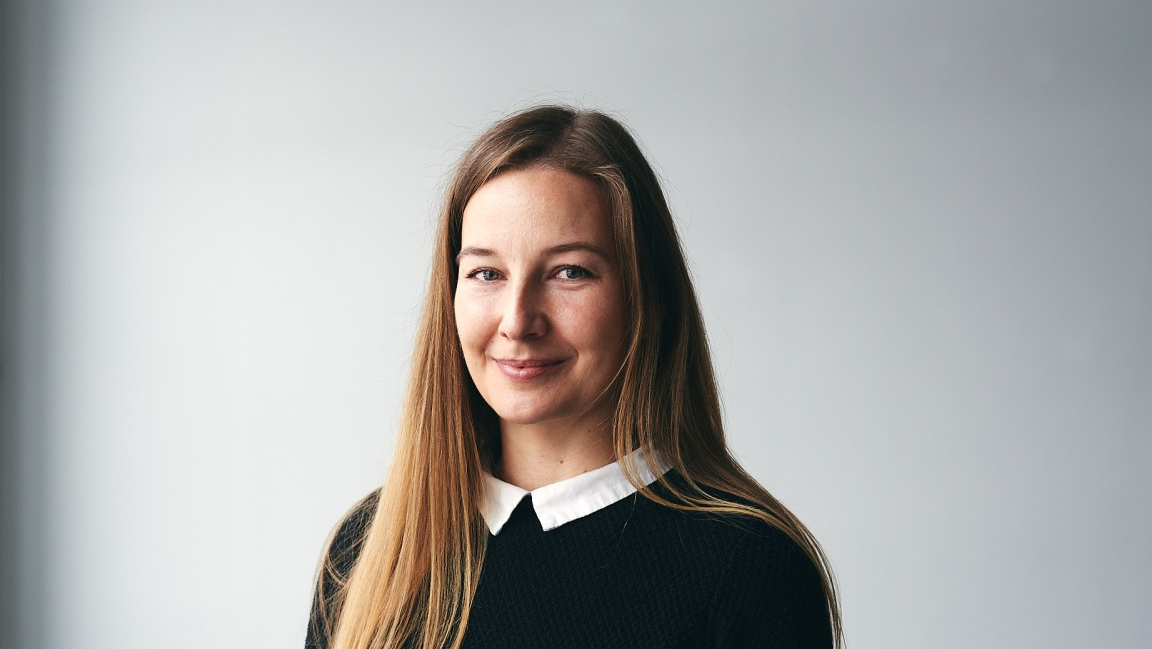
Alumni Interview: Mariana Hanková – From PhD to Policy and Consulting
In this interview, we speak with Mariana Hanková, a recent PhD graduate of the University of Chemistry and Technology Prague (UCT Prague). Mariana completed her doctoral studies in Food Chemistry and Technology, defending her thesis in 2024. Her research focused on sensory-active substances formed during milk processing, where she investigated the origins of specific odours and ways to prevent them.
During her doctoral studies, Mariana was also actively involved in academic and student representation, advocating for better conditions for PhD candidates through organizations such as the Council of Higher Education Institutions of the Czech Republic and Eurodoc. This engagement eventually led her to work for the Czech government as Head of the Secretariat under the Minister for Science, Research and Innovation, where she contributed to policy discussions related to doctoral education and research.
Today, Mariana works as a Senior Analyst at UNICO, a consulting company operating at the intersection of deep tech, innovation, and commercialization. Her work involves helping universities bring promising technologies to market, assisting companies in identifying and exploring innovation opportunities, and supporting investors in assessing the value, potential, and commercial relevance of emerging technologies.
Could you briefly introduce yourself?
Hi, I'm Mariana. I currently work as a senior analyst at UNICO, where we help bridge the gap between research (UNIversities) and the commercial world (COmpanies), primarily in deep tech. This involves working with ideas in the early stages and helping them find a path into real-world application.
I studied Food Chemistry and Technology at UCT Prague and defended my thesis in 2024. My research focused on sensory-active substances arising from milk processing - specifically their causes and possibilities for prevention. In plain terms, I was analysing smells and tracing them back to their source.
What did your transition into your current job look like after completing your PhD?
I took a little bit of a detour because of my extracurricular activities during my studies.
I became involved in student politics through the Academic Senate, and later through the Council of Higher Education Institutions and Eurodoc, where we advocated for better conditions for PhD students in the Czech Republic.
This experience led to my working as Head of the Secretariat under the Minister for Science, Research and Innovation, where I continued to work on this topic while also taking on the operational responsibilities similar to those, I had enjoyed at Eurodoc. Eventually, I wanted to reconnect with my background in chemistry and research, but I knew I did not want to return to the lab full-time. Through a mutual contact and a well-timed opportunity, I was able to secure my current role as an analyst at UNICO.
What was the most challenging part of this transition for you, and what helped you the most?
The biggest shift was in the nature of responsibility. In a professional setting, you are already the “expert“ with very limited room for experiments. In academia, longer timelines allow you to build a data-based foundation and reduce uncertainty to a comfortable level. Here, you have to rely more on your judgement and trust your knowledge and critical thinking skills in order to make sound decisions under pressure. Overall, I learned through experience and I was very fortunate in both of my transitions, as I was able to work with like-minded people who eased me into the new contexts.
In what ways did your doctoral studies help prepare you for your current job?
My PhD taught me how to work with large amounts of information, identify what is truly relevant, and structure it into clear outputs. It also shaped how I organize my work. And perhaps less obviously, it built a level of resilience that is essential, although doing sports is an important factor in this regard too.
Which skills you gained during your PhD do you use the most today and consider the most important?
Critical thinking, the ability to synthesize complex information, and resilience are among the most important. Independence and self-management are similarly essential, as is the ability to structure your own work, prioritise effectively, and deliver under time pressure. I would also highlight the ability to quickly get up to speed in unfamiliar topics, which is something quite useful.
Did anything from your PhD turn out to be useful even outside academia in ways that surprised you?
During my PhD I started to feel that having a PhD was not valued outside of academia, at least in the Czech context. However, I was pleasantly surprised to find that it still carries weight. Many of the skills developed during a PhD may seem “ordinary” at the time, but they are not as common as one might think. In the right contexts, they are recognised as valuable.
What would you recommend current PhD students not to underestimate during their studies?
I would not underestimate the importance of networking and developing skills beyond the narrow path of research. Not all PhD graduates can (or want to) continue in academia, and the earlier you start exploring other directions, the more options you will have. It is worth investing time in understanding what suits you and where you can add value.
Which competencies do you think PhD students should intentionally develop during their studies?
Independence, the ability to communicate complex topics clearly, critical thinking, and data analysis are foundational. I'd also add negotiation - having the confidence and skill to defend your ideas, provide constructive feedback, and bring others along through the quality of your reasoning. And perhaps one more: the ability to zoom out and see how your work fits into a bigger picture.