

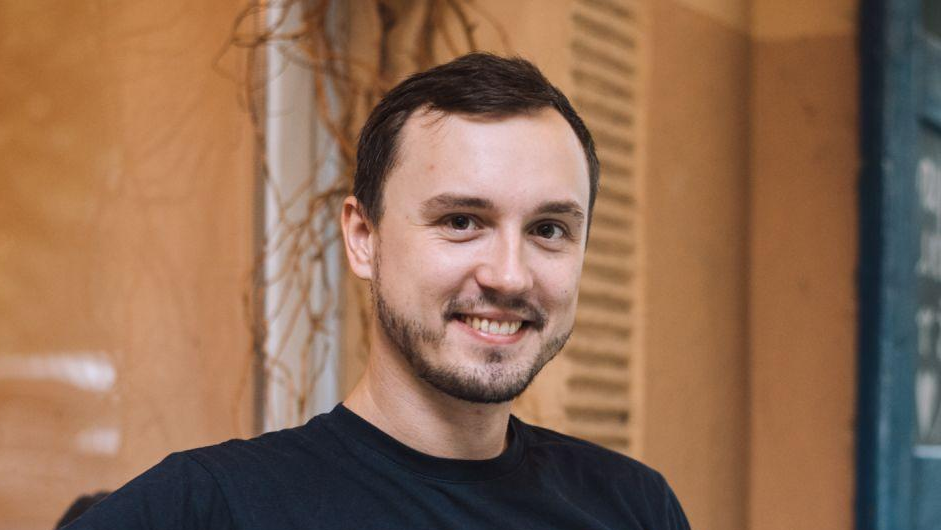
Alumni Interview: Marek Šoltys – From the Lab to Leading Pharma Projects
Marek Šoltys studied Chemical Engineering at University of Chemistry and Technology, Prague, where he also completed his PhD in 2023. His doctoral research focused on porous micro and nanoparticles and their use in improving the solubility of poorly soluble drug substances for oral pharmaceutical formulations, in close collaboration with Zentiva. During the final phase of his PhD, he transitioned into industry and joined Sandoz in Austria, where he first worked as a formulation scientist and now serves as a project manager leading international teams in generic drug development. In this interview, he reflects on his transition from academia to industry, shares how his doctoral studies prepared him for managing complex pharmaceutical projects, and offers practical advice to current PhD candidates on combining scientific expertise with communication, leadership, and business-oriented skills.
Could you briefly introduce yourself?
I studied chemical engineering at the Faculty of Chemical Engineering at UCT Prague, where I also completed my PhD. Today, I am a project manager at Sandoz in Austria, working in the development of generic pharmaceuticals, with previous experience as a formulation scientist in the same department.
I lead international teams on several key Sandoz projects, commuting between Czechia and Austria, and I enjoy being able to apply the strong scientific foundations from my studies in my daily work, developing actual medicines that will reach the market and patients.
What field did you study, when did you complete your PhD, and what was the focus of your research?
I studied chemical engineering at UCT Prague and completed my PhD there in 2023. My doctoral research focused on porous micro- and nanoparticles and their use in improving the solubility of poorly soluble drug substances for oral pharmaceutical formulations.
The PhD was carried out in close collaboration with the pharmaceutical company Zentiva in Prague, which allowed me to work on topics directly relevant to industrial drug development.
What did your transition into your current job look like after completing your PhD?
In my case, the transition actually started during my PhD. I had completed most of the experimental work and published the main articles, so I began looking for positions abroad while finishing the thesis writing.
In mid-2020, I joined Sandoz in Austria as a formulation scientist. I initially expected to finish the thesis within a few months, but the intensity of the new role meant that my “just finishing” eventually turned into about 2.5 years. In hindsight, this overlap was demanding, but it allowed me to smoothly move from academia into industry.
What was the most challenging part of this transition for you, and what helped you the most?
The transition itself was not overly difficult. This was largely because I had already been exposed to a corporate environment during my PhD through my collaboration with Zentiva. In addition, Sandoz supported my relocation, and my manager had himself recently transitioned from academia, which helped us connect very well.
On a personal level, the biggest support came from my girlfriend at the time (now my wife). Even though I suddenly started working in a different country, about five hours by car from Prague, we managed to make it work smoothly together.
In what ways did your doctoral studies help prepare you for your current job?
Pharmaceutical development is highly rigorous scientific work. It requires designing complete study programs, not just individual experiments, writing complex technical reports, collaborating across disciplines, and presenting structured conclusions to management.
A good PhD prepares you for exactly these tasks, and in my case it did. Managing generic pharmaceutical development projects turned out to be surprisingly similar to running a PhD project—just on a larger scale and with stricter timelines.
Which skills you gained during your PhD do you use the most today and consider the most important?
The most important skills I use today are structured writing, effective presentation, and the ability to adapt communication to different audiences. Designing and planning entire development projects is another key competence that came directly from my PhD experience.
I also strongly value the organizational and leadership skills I gained through volunteering in the Academic Senate and other student organizations, which complemented the purely scientific training in terms of leading diverse teams and negotiating with important decision‑makers.
Did anything from your PhD turn out to be useful even outside academia in ways that surprised you?
I was surprised by how similar academia and industrial development actually are. While the business focus and time pressure differ, the hands‑on scientific work is often very comparable.
The main difference lies in mindset and in the strict pharmaceutical quality standards required in industry. Although these may initially seem excessive to someone from academia, they quickly become a natural and essential part of ensuring patient safety. I also believe that academia could draw inspiration from this approach when it comes to ensuring the validity of results and could benefit from it in the long term, especially given the ever‑growing problem of reproducibility in published scientific research.
What would you recommend current PhD students not to underestimate during their studies?
The world today is very different from 10 or 20 years ago. Many routine development activities are increasingly being moved to more cost‑efficient regions, while advanced and highly specialized research remains economically viable in Europe.
In pharmaceuticals, this includes areas such as biologics or complex drug products, where PhD‑level expertise is often essential. Equally important is the ability to explain the value of this expertise to business‑oriented decision‑makers or to build something independently, such as a start‑up.
My recommendation to PhD students is to be proactive: in addition to building your scientific knowledge, drive your own ideas, get involved in activities beyond your thesis, and develop skills that require organizing, collaborating, and convincing others of the importance of your work.
Which competencies do you think PhD students should intentionally develop during their studies?
Strong scientific skills and the ability to conduct high‑quality research are the baseline. However, relying on these alone often means depending on others to define priorities and opportunities.
Developing a business‑oriented mindset and soft skills—such as presenting, networking, negotiation, budgeting, project planning, and team leadership—allows PhD graduates to truly stand out and succeed in both academic and industrial environments.
If you do that, I believe you will stand out as a candidate for many interesting roles or be well equipped to set up a successful business of your own.