

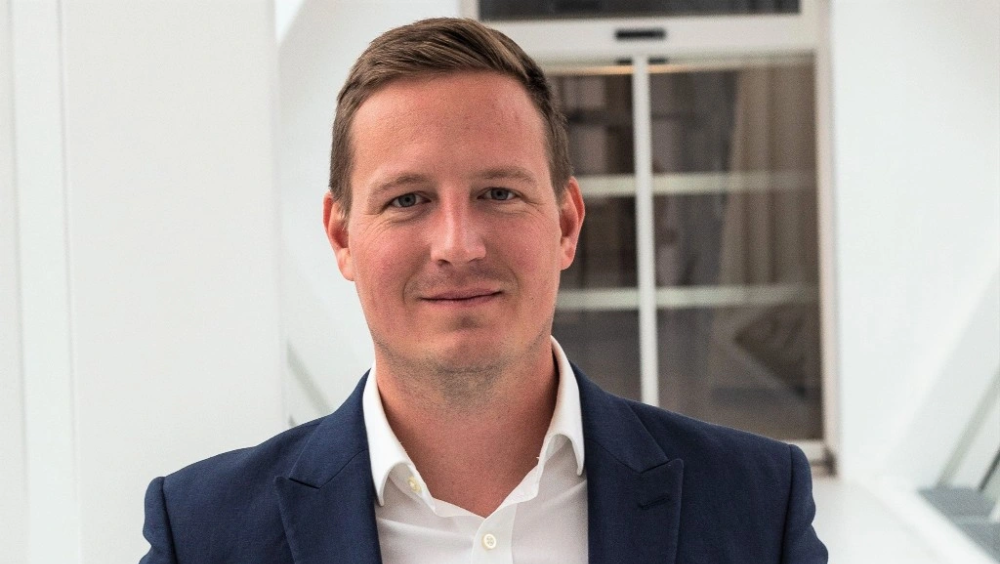
Alumni Interview: Jakub Crha – From CFD Modelling to Industry
Jakub Crha is a recent PhD graduate from University of Chemistry and Technology, Prague, where he completed his doctoral studies in Chemical Engineering in December 2024. His research focused on CFD modelling of fully resolved two-phase flows, with particular attention to the effects of surface active agents on the rise of single and multiple bubbles in aqueous solutions. During the final stage of his PhD, he transitioned into industry and now works as a CAE analyst at NUM solution. In this interview, he reflects on his move from academia to practice, shares how his doctoral studies prepared him for his current role, and offers advice to current PhD students on building skills for their future careers.
Could you briefly introduce yourself?
My name is Jakub Crha, I completed my PhD on University of Chemistry and Technology, at the department of Chemical engineering. At the moment I am working as a CAE analyst in a company NUM solution.
What field did you study, when did you complete your PhD, and what was the focus of your research?
I have spent my entire academic path - from bachelor's to doctoral level - in the field of Chemical Engineering, and I defended my PhD thesis in December 2024. My focus remained the same since my master's studies. I was dealing with CFD modelling of fully resolved two-phase flows, initially in a general context, and later during my PhD focusing on the specific effects of surface active agents in aqueous solutions on single and multiple bubble rise.
What did your transition into your current job look like after completing your PhD?
Actually I found a full-time job before finishing my PhD, as my scholarship ended after 4.5 years (extended due to COVID). The transition itself was quite smooth and I adapted quickly to my new role.
What was the most challenging part of this transition for you, and what helped you the most?
The hardest part was finding the time and motivation to finish my thesis, but my wife helped me with that, and also I did not want to disappoint my supervisors.
In what ways did your doctoral studies help prepare you for your current job?
It helped me the most with both theoretical and practical knowledge of CFD modelling, which I apply in my current job (although in a different field, the fundamentals are the same).
Which skills you gained during your PhD do you use the most today and consider the most important?
From my point of view, these are mainly technical (hard) skills, which I use on a daily basis.
Did anything from your PhD turn out to be useful even outside academia in ways that surprised you?
Definitely the ability to learn independently, conduct research on any topic, present my work, and defend it before other technical specialists. These are the things that I did not expect to be that important before I started working.
What would you recommend current PhD students not to underestimate during their studies?
I would recommend focusing on your work from as broad perspective as possible. Sometimes one can focus too narrowly on a specific part of the field in which the thesis is defined - try to think about it also from different perspectives (e.g., from a mechanical engineer's point of view, or how you would explain your research topic to someone encountering it for the first time). In your job you will be in contact with people who studied different fields and this can become an advantage.
Which competencies do you think PhD students should intentionally develop during their studies?
Try to think outside the box - imagine yourself a few years from now in your dream job or academic position and consider what skills you could develop to improve your chances of reaching your dream position. Do you feel the need to improve your English or your management skills? UCT offers a wide variety of optional courses that can help you address your specific needs, or you could join one of the many university associations, where you can learn how to work in a team or manage a project on your own.