

Alumni Interview: Alex Mathers – Staying in Academia as a Postdoc
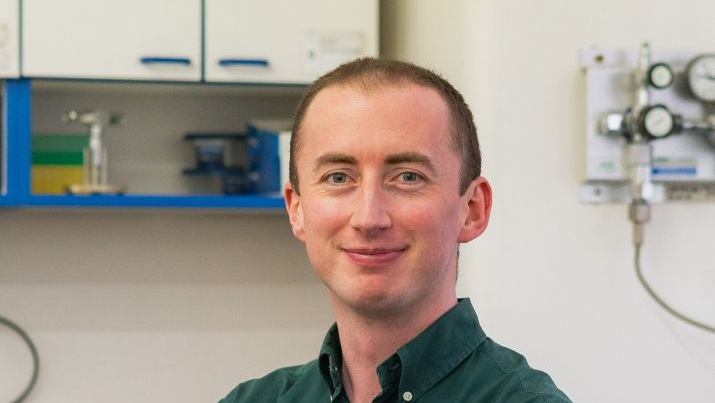
Alex Mathers is a postdoctoral researcher at UCT Prague who originally comes from Scotland, where he studied chemical engineering at the University of Strathclyde. He completed his PhD in physical chemistry in 2023, focusing on the rational design of amorphous solid dispersions for poorly water-soluble drugs by combining experimental solubility measurements with thermodynamic modeling. After finishing his PhD, he seamlessly transitioned into a postdoctoral position within the same research group, continuing and further developing his work with greater independence. In this interview, he reflects on his journey from doctoral studies to postdoctoral research, highlights the key skills he developed along the way, and shares practical advice for current PhD students—particularly emphasizing the importance of critical thinking, clear communication, and strong research organization.
Could you briefly introduce yourself?
My name is Alex Mathers, and I am originally from Scotland. I am currently working as a postdoctoral researcher at UCT Prague.
What field did you study, when did you complete your PhD, and what was the focus of your research?
I studied chemical engineering in Glasgow at the University of Strathclyde, where I completed my master’s degree. In 2018, I moved to the Czech Republic to start my PhD in physical chemistry at UCT Prague, which I completed in April 2023. Broadly speaking, my research aimed to advance the rational design of amorphous solid dispersions for poorly water-soluble drugs by integrating experimental solubility measurements with thermodynamic modeling.
What did your transition into your current job look like after completing your PhD?
The transition was seamless, since I stayed in the same research group and moved directly into a postdoctoral role. In many ways, it felt like a natural continuation of the work I had already been doing.
What was the most challenging part of this transition for you, and what helped you the most?
There was no major challenge, since I stayed in the same group and continued along the same research line. The main difference was moving beyond the formal PhD framework and working with more independence and flexibility.
In what ways did your doctoral studies help prepare you for your current job?
In my case, the PhD prepared me very directly for my current role, because I continued in the same research area as a postdoc. It gave me the experience and confidence to design research more independently, interpret results critically, and contribute more actively to the direction of the work.
Which skills you gained during your PhD do you use the most today and consider the most important?
The skills I use most are critical thinking, data analysis, and scientific communication. I would also include independence in research, because my PhD taught me how to approach problems systematically and work through them with relatively little supervision. At the same time, it also taught me the value of collaborating with other researchers who could contribute additional expertise and analytical techniques to strengthen the interpretation of my results.
Did anything from your PhD turn out to be useful even outside academia in ways that surprised you?
Although I have not yet worked outside academia, it is clear to me that many of the skills developed during a PhD are highly transferable beyond it. In particular, the ability to think critically, solve complex problems, and work effectively with uncertainty is valuable in almost any professional environment.
What would you recommend current PhD students not to underestimate during their studies?
I would say PhD students should not underestimate the importance of being able to communicate their work clearly. It is not enough to understand a topic deeply; you also need to be able to explain your research to supervisors, collaborators, and people outside your immediate field.
Which competencies do you think PhD students should intentionally develop during their studies?
I think PhD students should intentionally develop competencies such as project management, careful documentation, and good research organization. A PhD is not just about becoming knowledgeable in a specific topic, but also about learning how to structure long-term work, keep clear records of experiments and results, and make sure that information can be easily retrieved when needed.